
CSO reflects on the antimicrobial resistance challenge
By Stu Slayen
The COVID-19 story has dominated the medical headlines for a year-and-a-half. On the downside, it has been difficult to generate serious conversations about other important issues in health and science. On the upside, the public is paying attention to the research process like never before and we are seeing how fast pharmaceutical solutions can be brought to market when the need is pressing.
Well, when it comes to antimicrobial resistance (AMR), says Dr. Grant Pierce, the need is certainly pressing. And it has been for some time.
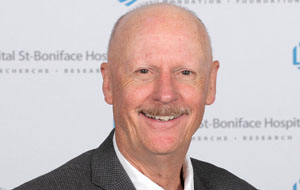
“The challenge is that many of our current antibiotics still work, so it hasn’t seemed like the urgency has been there, but it is,” says Dr. Pierce, Chief Scientific Officer of Viotika Life Sciences. “Without new solutions to AMR, surgeries we take for granted now—like hip and knee replacements, even some dental work—will become impossible to perform because of the risk of life-threatening infection. We will reach that tipping point soon. This will happen in our children’s lifetimes.”
The World Health Organization explains AMR as follows: “AMR occurs when bacteria, viruses, fungi, and parasites change over time and no longer respond to medicines making infections harder to treat and increasing the risk of disease spread, severe illness, and death. As a result of drug resistance, antibiotics and other antimicrobial medicines become ineffective and infections become increasingly difficult or impossible to treat.”
Without new solutions, it is expected that by 2050, about 10,000,000 people will die every year because drugs that work today no longer will.
Dr. Pierce and his collaborators are advancing the VIO platform of drugs to address the challenge. Unlike today’s common antibiotics, the VIO platform inhibits a novel target—NQR (Na+- translocating NADH: ubiquinone oxidoreductase). NQR is an energy-producing enzyme in Gram-negative pathogenic bacteria. Conventional antibiotics target bacteria in one of three ways: by targeting protein synthesis, DNA replication, or cell wall development. And bacteria have been learning how to defend themselves against these medicines. The Viotika approach is entirely different.
When Dr. Pierce and his colleagues complete their research, the VIO platform targeting NQR will represent and entirely new model for treating certain infections, the first new class of antibiotics to be introduced in nearly 40 years.
The research is about to move into the in vivo (animal) stage with a focus on Neisseria gonorrhoeae, the organism related to gonorrhea, a disease that is exploding in incidence around the world. Based on results in the lab, Dr. Pierce is optimistic that the VIO drugs will target the organism effectively. He is also optimistic, as COVID appears to wane, that important conversations about AMR will start to emerge.
“We are seeing large global funders and big pharma take an interest,” he says. “And people have been listening to scientists on the radio every day. We see how disruptive global health challenges can be. I think people are ready for important conversations and novel science.”